What it is and why it is genuinely worth the trip
The Genoa Science Festival is not a niche event for specialists. It is one of those rare events that manages to bring together nuclear physicists and primary school children, Nobel laureates and secondary school teachers, university researchers and curious pensioners — all in the same room, facing the same questions, with the same sense of wonder. This is why it has become, over the twenty years since its founding in 2003, one of the most important science events in Europe for the general public. Not the most technical. The most human.
The 24th edition in 2026 has "Perspectives" as its theme — a word that in the language of science carries multiple meanings: the observer's point of view, the future trajectories of research, the change of scale that transforms a local phenomenon into a global problem. It is the kind of theme that works equally well for a cosmology lecture and a children's optics workshop: the festival knows how to build this continuity without making it trivial.
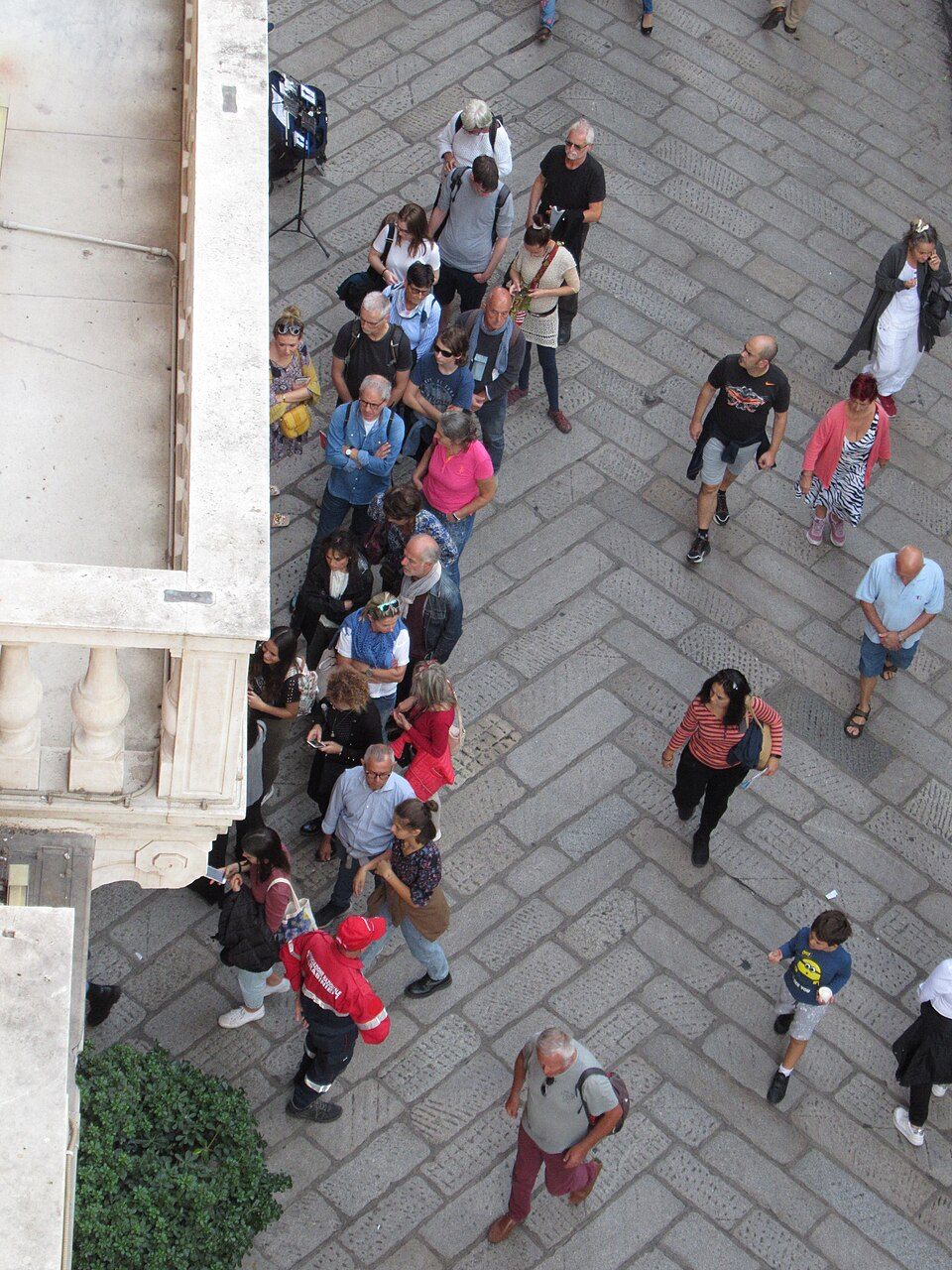
The programme is a complex organism: over 300 events spread across ten days, in more than 50 different spaces throughout the city. The main venues are the Palazzo Ducale and the Palazzo della Borsa in the heart of Genoa's historic centre, but the festival does not stop there. Neighbourhood libraries, university courtyards, squares, theatres — all of Genoa becomes an open laboratory. This means that each day at the festival is unpredictable in the best sense: you can walk into a room to hear a world-famous scientist and find, in the room next door, a group of middle-schoolers building a robot with Lego.
Among the 300 speakers featured in recent editions are names such as Carlo Rovelli, Elena Cattaneo, Enrico Giovannini, Barbara Mazzolai and Lisa Randall — people who in their working lives do real research and who at the festival pause to explain why that research changes the way we look at the world. This is not dumbed-down science communication: it is science told by those who live it, with the clarity of someone who knows they have an audience that is curious but not specialised.
For families with children, the Genoa Science Festival is one of Italy's most valuable and intelligent events. The hands-on workshops are designed for different age groups and must be booked — it is strongly advisable to do so in advance, as they fill up quickly. A six-year-old can experience the effect of a Fresnel lens firsthand. A fourteen-year-old can take part in a simulated space mission. A forty-year-old adult can sit in silence for twenty minutes listening to a cosmologist explain why the universe has no centre. All real, verifiable year after year in the festival programme.
How to organise your festival days
With 300 events over 10 days, selection is essential. The practical advice is to read the programme before you travel and identify 4–6 must-see events for each day, leaving room for happy surprises. Main talks at the Palazzo Ducale typically last 60–90 minutes; workshops are booked online. Mornings are ideal for children's workshops; afternoons and evenings are the best time for talks and encounters with researchers. Those staying in Rapallo can choose to go to Genoa every day or alternate with days on the Riviera, with total flexibility.