What it is and why it's worth the trip
Genoese pesto is not just a sauce: it is cultural heritage. And the World Pesto Championship treats it as exactly that. This is not a television cooking competition or a glossy food event: it is a serious contest with precise rules, where hundreds of competitors from around the world are judged on their ability to execute an ancient recipe with the right tools — a white Carrara marble mortar and a wooden pestle — following the timings and gestures of tradition.
The history of this championship begins in 2007, on the initiative of Palatifini — a Genoese association of local gastronomy enthusiasts — supported by the Genoa Chamber of Commerce. The idea was simple: to defend the authentic pesto recipe at a time when "pesto" was beginning to mean anything, anywhere in the world, made with any ingredient. The response was remarkable: professional chefs from Japan, Australia, the United States, Russia and Brazil began submitting their applications alongside born-and-bred Genoese.
The 11th edition was held on 21 March 2027. The format is the established one: 100 selected competitors — divided by age category, including the very young — who compete in a marathon of pestling judged by a panel of experts. The criteria: colour of the pesto, fragrance, consistency, adherence to the original recipe. The basil must be DOP from the Riviera Ligure di Ponente. The oil must be Ligurian extra virgin olive oil. The cheese: Parmigiano Reggiano and Pecorino. The pine nuts: Italian. No compromises.
For those who are not competing, the event is open to the public. Palazzo Ducale transforms for the occasion into a venue for gastronomic celebration: tastings, stands from Ligurian producers, meetings with basil and DOP oil growers. It is one of those events where you can learn a great deal about Genoese food culture simply by wandering among the stalls and listening.
What to expect in practice
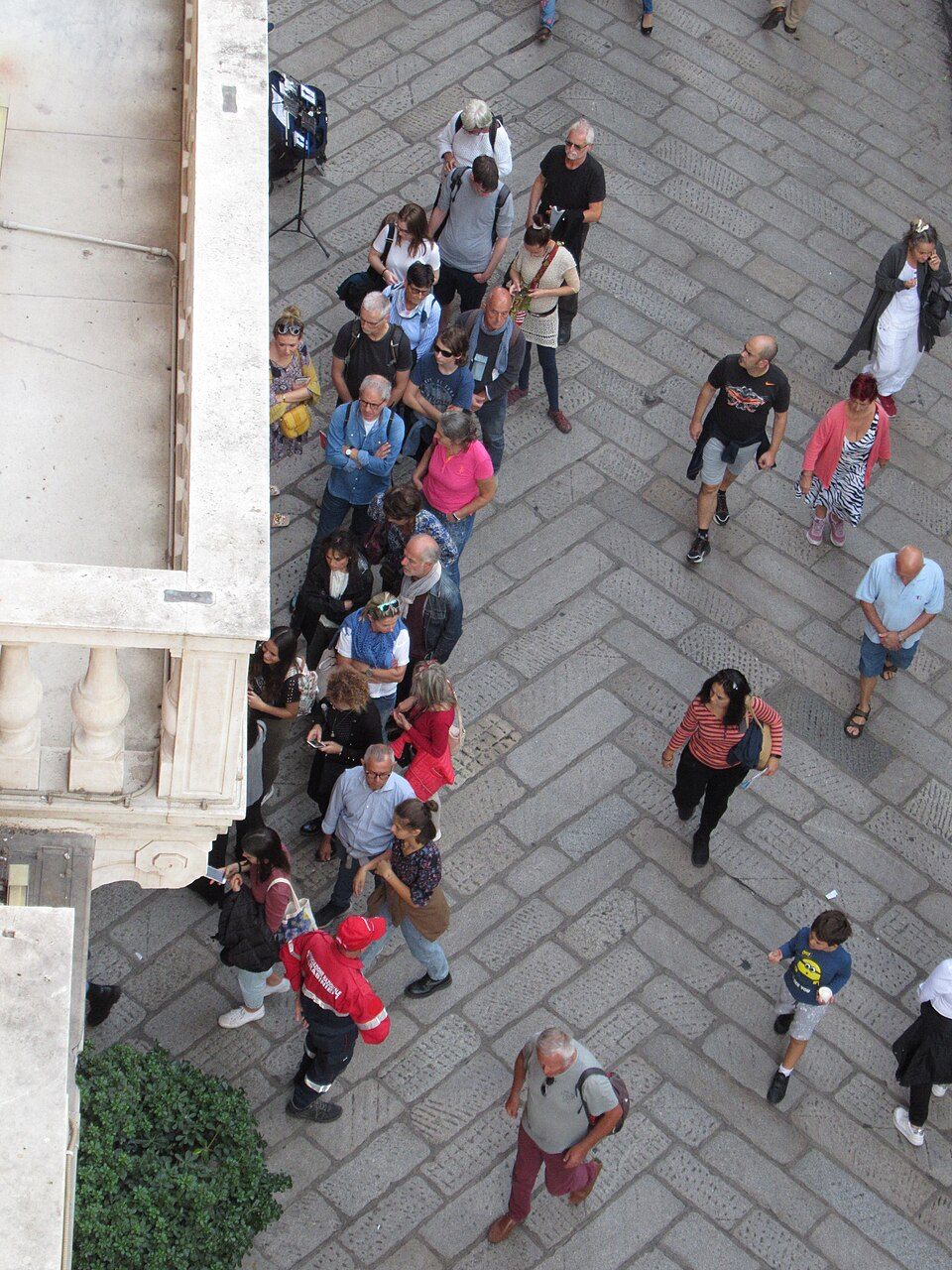
The main competition runs for a full day. Competitors take turns at the mortars in successive sessions, and the public can watch freely. The atmosphere is festive but focused: there is the respectful quiet of those following the grinding, and the colourful bustle of those exploring the food stalls alongside. Palazzo Ducale, with its halls and courtyard, provides an exceptional backdrop.
For those coming from Rapallo, the ideal plan is to arrive in the morning — perhaps stopping at the Mercato Orientale, just a few minutes from Palazzo Ducale — watch the competition in the afternoon, have dinner in the historic centre and take the train home in the evening. A full day that does not require overnight accommodation in Genoa.